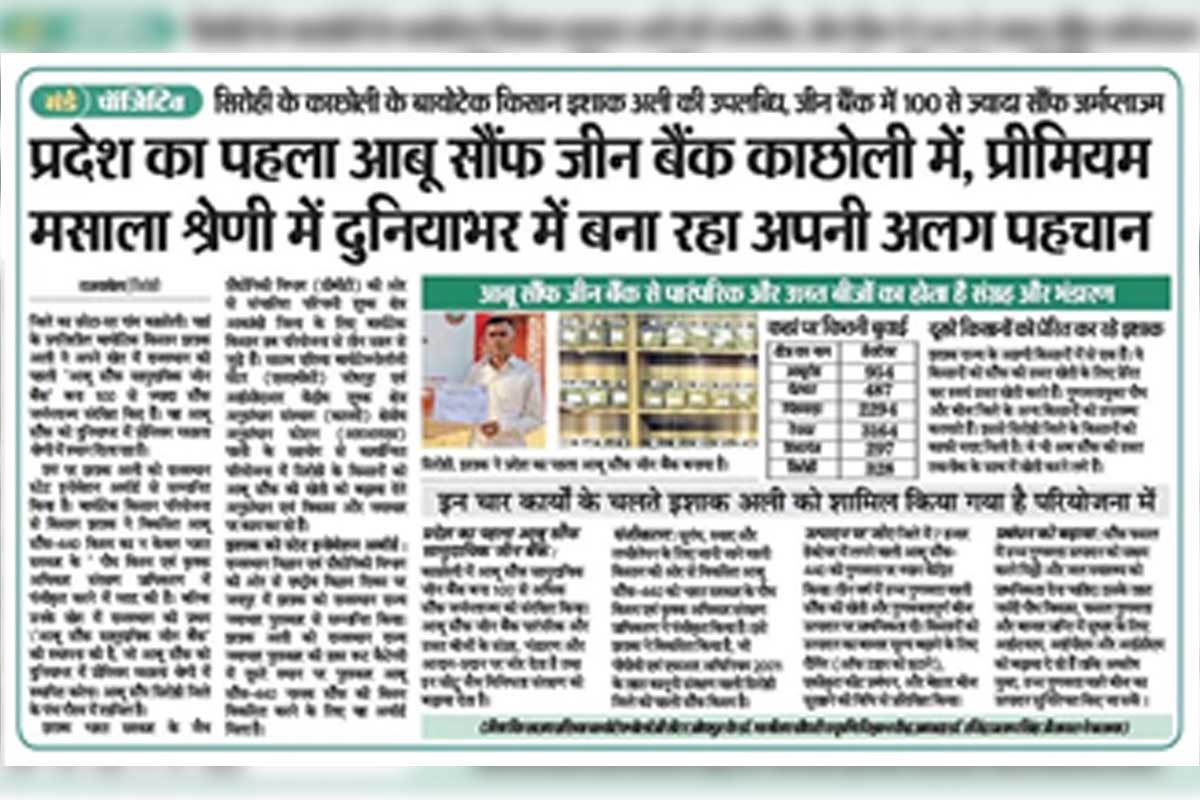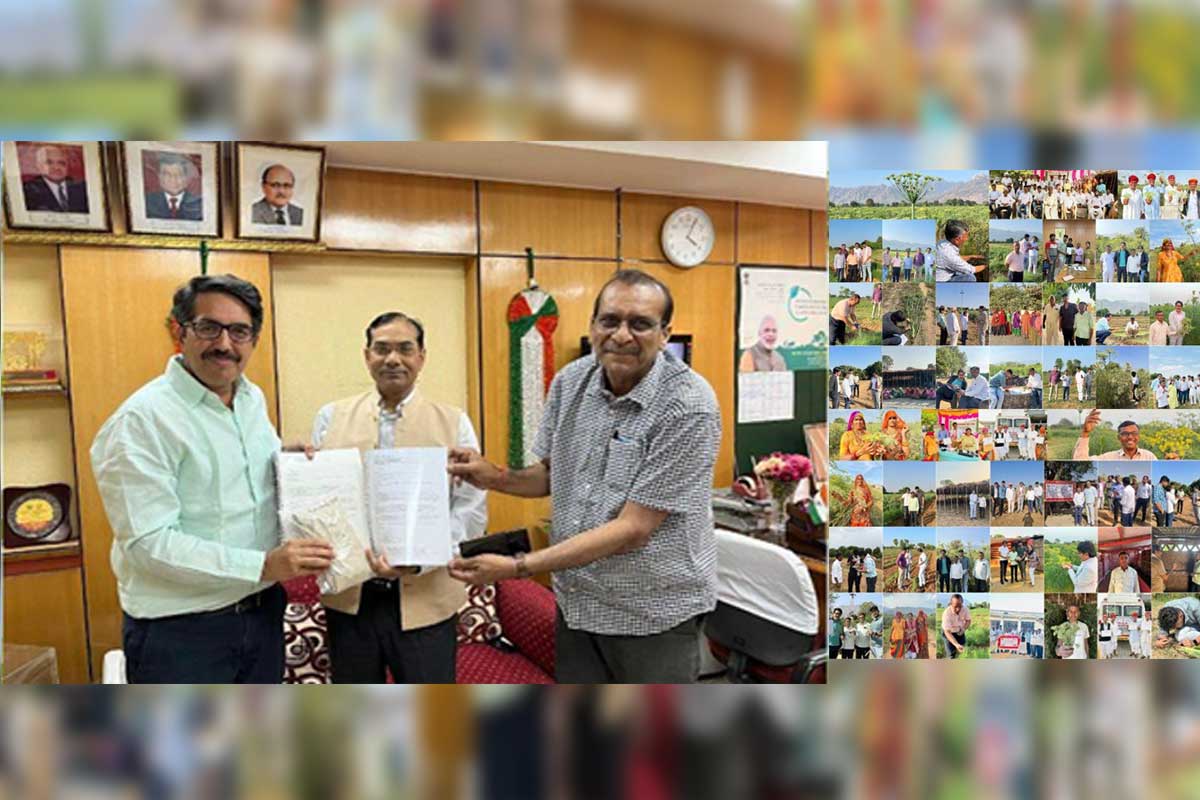
A living repository of 150+ fennel varieties conserved by tribal farmers of Sirohi.

A Historic Moment

Conservation rooted in community leadership

Rajasthan celebrates a groundbreaking biodiversity initiative with the Abu Saunf Community Gene Bank, established at village Kachholi in Swaroopganj tehsil, Sirohi district.

The initiative honors the untiring efforts of smallholder farmers who serve as custodians of biodiversity. Supported by the Department of Biotechnology under the Biotech-KISAN Hub for Aspirational Districts of Sirohi and Jaisalmer, it was implemented jointly by the South Asia Biotechnology Centre, Jodhpur, and ICAR-CAZRI Regional Research Station, Pali.

Commenced in 2020 and formally opened on World Food Day 2025, the community gene bank has become a model for conservation, utilization of genetic wealth, and safeguarding biodiversity for scientists, researchers, officials, policy makers, students, and farmers.


At its heart the smallholder farmers of Sirohi are custodians of seeds, knowledge, and resilience.

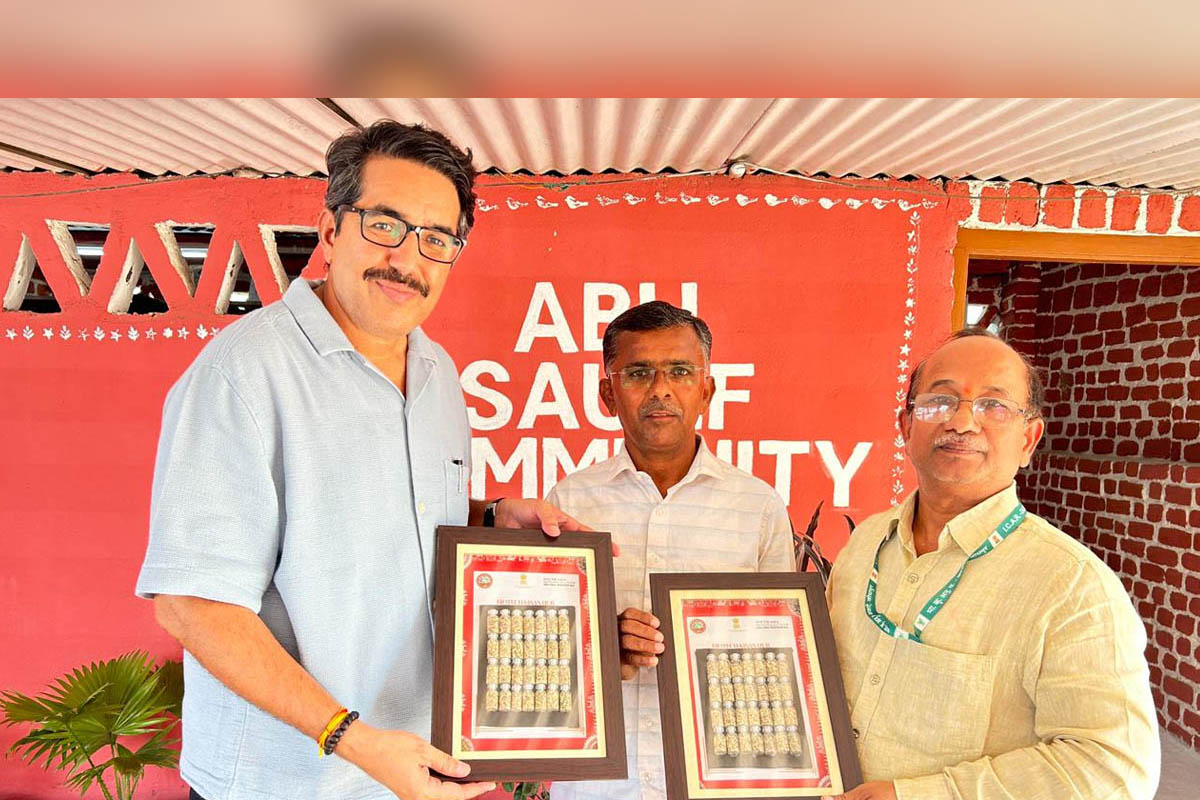
The Fennel Treasure
Fennel seed repository visual

Inside the Abu Saunf Community Gene Bank

More than a repository, it is a living system of conservation and innovation.

  • Houses 150+ unique fennel accessions.
  • Collected from major fennel-growing regions of Rajasthan.
  • Special focus on traditional Sirohi varieties.
  • Includes farmer-developed and locally adapted cultivars.
Fennel fields and seed conservation

From Seed to Conservation

Initiated with marginal resources under the Biotech-KISAN Hub project, the gene bank emphasizes collection, documentation, storage, and exchange of traditional and improved seeds, especially farmer-developed cultivars adapted to local agro-climatic conditions.

Sirohi farmer hosts, under guidance from SABC Jodhpur and CAZRI RRS Pali, demonstrate the role of local communities in protecting genetic resources, conserving biodiversity, and developing high-yielding improved fennel varieties suited to local agro-ecology.

Fennel variety image 1 Fennel variety image 2 Fennel variety image 3
Knowledge & Field Action

Ground impact and learning networks

Field action and farm demonstration

Impact on Ground

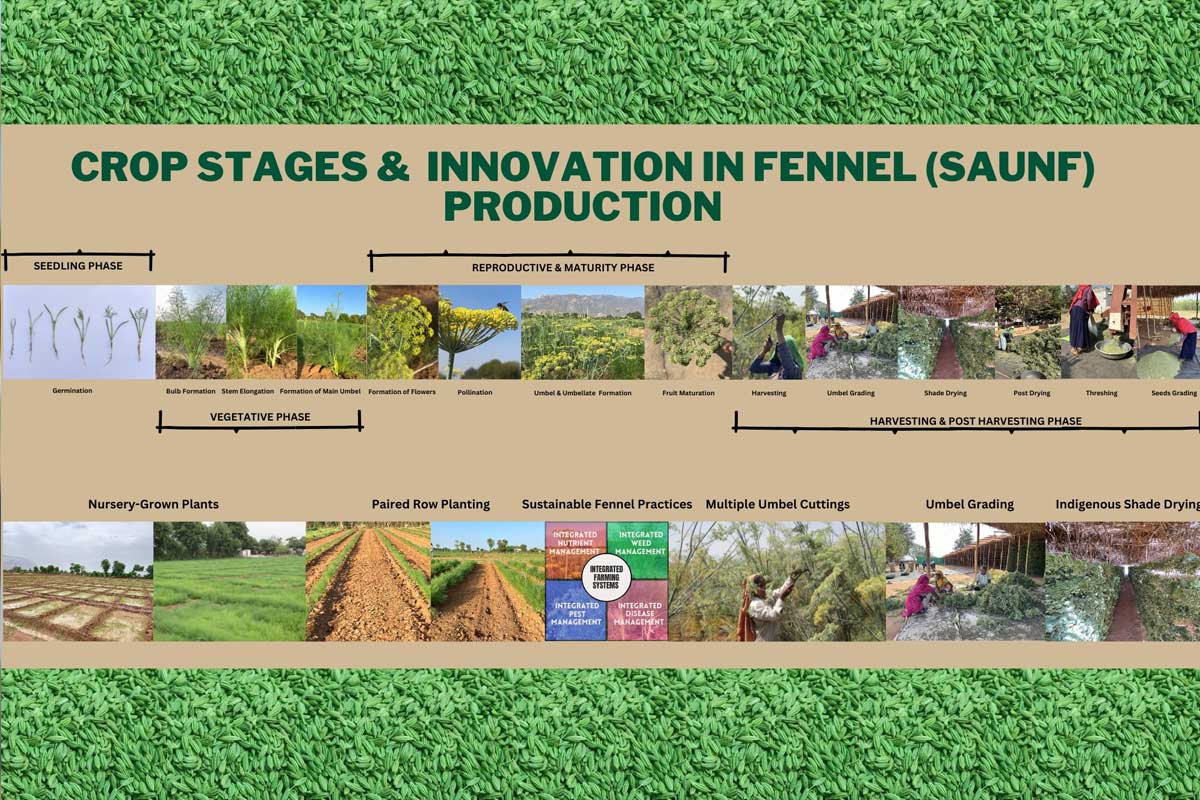
The on-farm facility bridges traditional knowledge and modern agriculture, enables in-situ conservation, and helps farmers shift from direct-seeded cultivation to disease-free seedling planting.

It also catalyzes farmers to evolve into entrepreneurs engaged in seed multiplication, market development, and value creation while strengthening farmers' rights and protecting indigenous crops from exploitation.

Knowledge resources and capacity building

Knowledge Resources

Structured exposure visits and capacity-building activities strengthened farmer knowledge on improved production practices, including integrated nutrient management, multiple umbel cutting, low-cost shade drying, grading, and post-harvest management.

Capacity building and exposure visits

Capacity Building & Exposure Visits

The Nagaur–Sirohi and Jodhpur–Pali–Sirohi Kisan Samriddhi Yatras in 2024 and 2025 enabled peer learning and strengthened value-chain linkages for quality fennel production.

Farmers visiting the gene bank

Routine Learning Visits

Scientists, students, farmers, and stakeholders from within and outside Sirohi routinely visit the community gene bank to learn scientific fennel production, shed-drying techniques, and seedling procurement.

Gallery

Fennel Diversity Gallery

Fennel variety 1
Fennel variety 2
Fennel variety 3
Fennel field 4
Seed storage 5
Farmers at work 6
Gene bank interior 7
Biodiversity closeup 8
Harvesting scene 9
Community event 10
Voices from the Field

News & Views